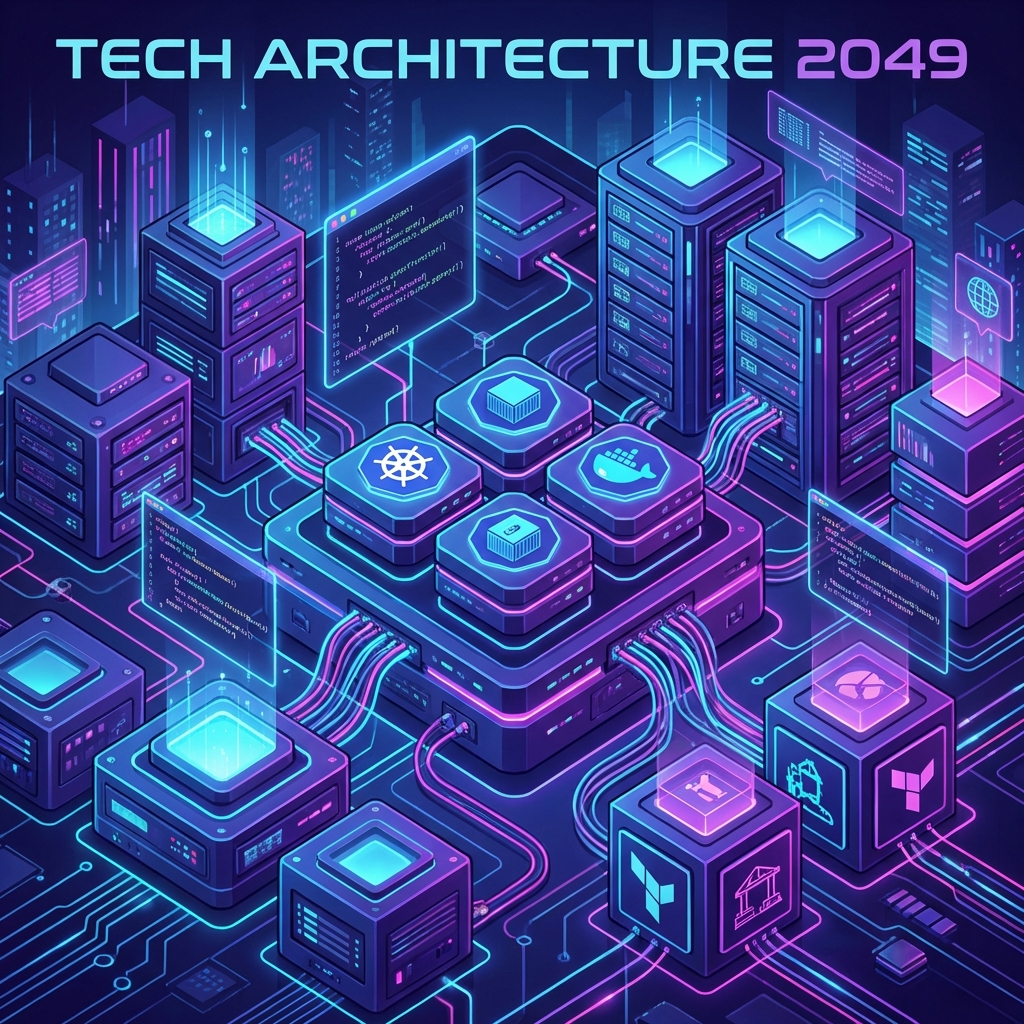
Deep Dive into the Tech Stack
Under the Hood: The Technology Behind KGR33N 🛠️
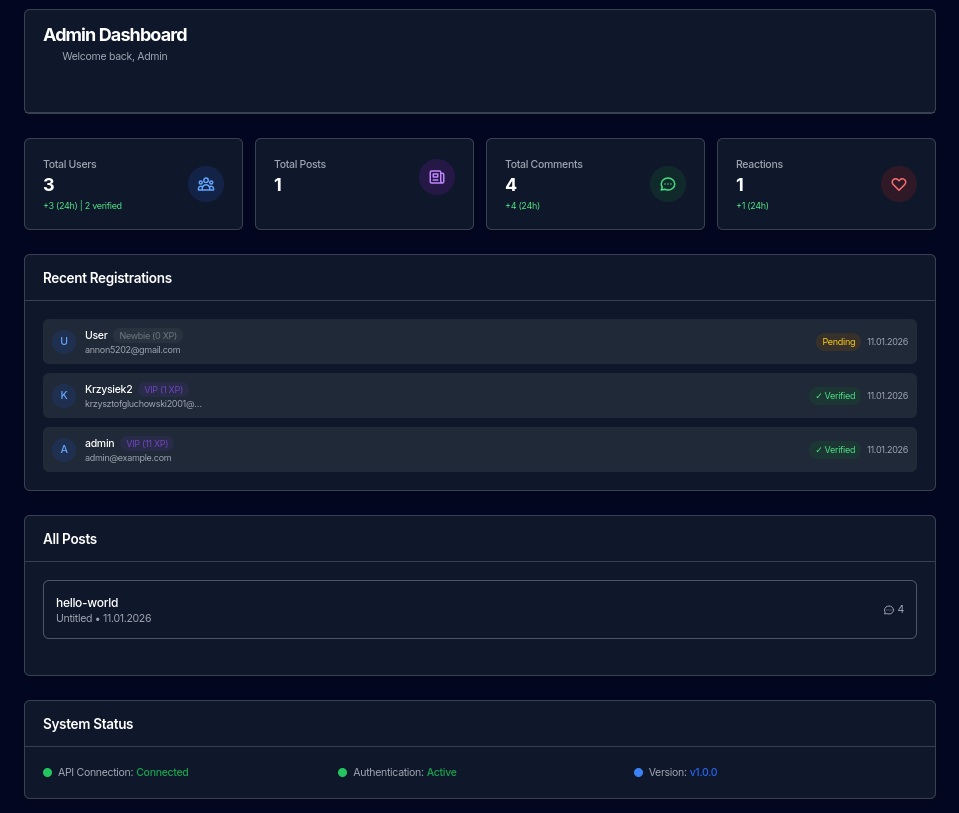 A sneak peek into the Admin Dashboard managing this platform.
In this post, I want to take a deeper dive into the technical decisions and the stack that powers this website. It’s built not just to be a portfolio, but a playground for modern DevOps practices and full-stack development.
The Core Stack
Frontend: Astro + TypeScript 🚀
I chose Astro for the frontend because of its “Inventory Architecture” (Islands Architecture). It delivers zero JavaScript to the client by default, hydrating only the interactive components when needed.
- Performance: Static HTML generation for blazingly fast load times.
- Interactivity: We use Vanilla JS and TypeScript for light interactions, and can easily drop in React or Svelte components if complexity grows.
- Styling: TailwindCSS (or custom CSS variables here) provides a scalable design system.
Backend: FastAPI + Python 🐍
For the API, I went with FastAPI. It’s modern, fast (as the name implies), and leverages Python 3.6+ type hints for automatic validation and documentation.
- Async/Await: Fully asynchronous for handling concurrent requests efficiently.
- Auto Docs: Automatic interactive API documentation (Swagger UI) at
/docs. - Security: Robust dependency injection system for authentication and authorization.
Database: PostgreSQL + SQLAlchemy 🐘
Data persistence is handled by PostgreSQL, the world’s most advanced open-source relational database.
- ORM: SQLAlchemy abstracts the SQL complexity, allowing us to work with Python objects.
- Migrations: Alembic ensures our database schema evolves safely alongside our code.
Infrastructure & DevOps ☁️
This is where the real fun begins. The entire platform is deployed using Infrastructure as Code (IaC) principles.
Kubernetes (K3s) ☸️
Instead of simple Docker containers, I run a lightweight Kubernetes cluster using K3s.
- Scalability: While running on a single node now, it’s ready to scale horizontally.
- Resiliency: Kubernetes handles pod restarts, health checks, and rollouts automatically.
- Ingress: Nginx Ingress Controller manages external access to the services.
Terraform 🏗️
The AWS infrastructure (EC2 instances, Security Groups, IAM roles) is provisioned using Terraform. This means I can tear down and recreate the entire environment with a single command (terraform apply), ensuring no “configuration drift” occurs.
CI/CD: GitHub Actions 🔄
Every push to the repository triggers a pipeline that:
- Tests: Runs unit tests and linting.
- Builds: Creates optimized multi-stage Docker images.
- Deploys: Updates the Kubernetes cluster with zero downtime.
Why This Complexity?
You might ask, “Why use Kubernetes for a personal blog?”
The answer is simple: Learning and Demonstration.
By building a production-grade environment on a small scale, I’m honing the skills required to manage enterprise-grade systems. It proves that these technologies are accessible and powerful tools for any developer.
Stay tuned for more technical deep dives!
Comments